United Kingdom
September 3, 2026
A new study by the Cyril Zipfel group at The Sainsbury Laboratory in collaboration with the Plant Reproduction and Development Laboratory of the Ecole Normale Supérieure in Lyon (France), sheds new light on a key molecular dialogue required for optimal seed development and could enable new approaches for engineering seed size.
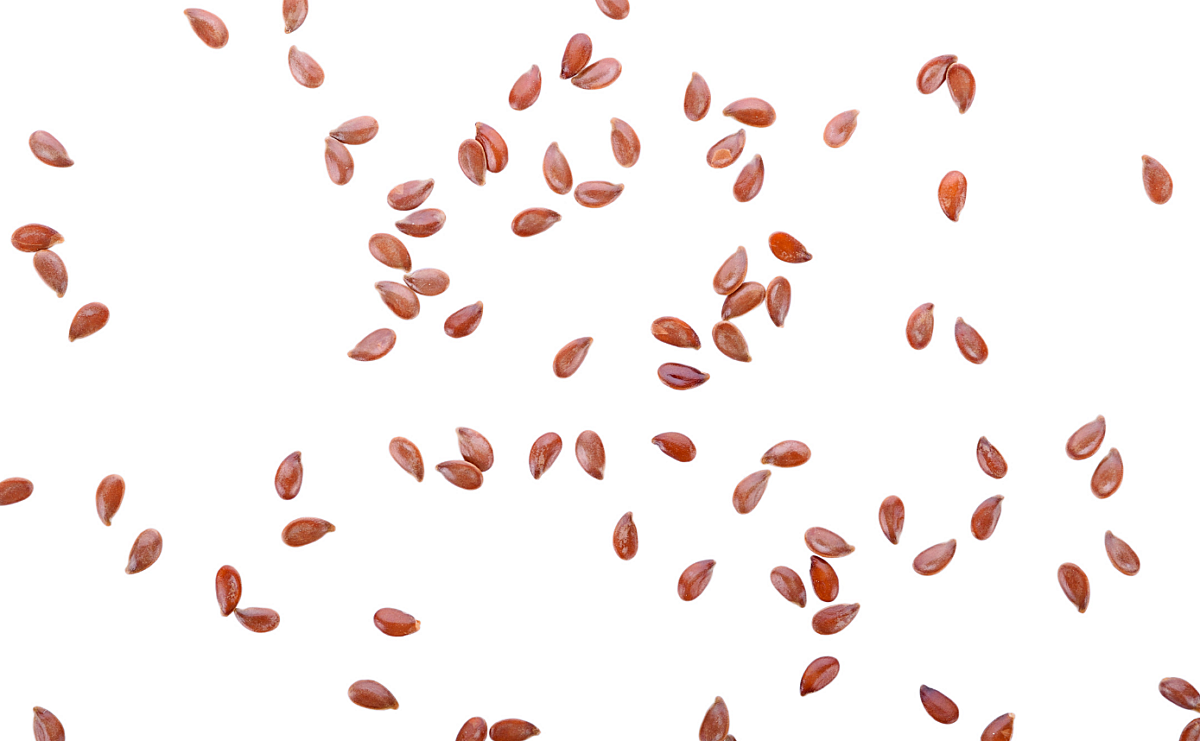
From staple crops like wheat, rice, and maize to oilseeds such as sunflowers, seeds are the foundation of global agriculture, providing most of the world’s food supply. Understanding how seeds develop is crucial for food security and more sustainable and resilient agricultural systems.
A new study by the Cyril Zipfel group at The Sainsbury Laboratory sheds light on a key molecular dialogue in seed development. The research reveals that the PIPL7 peptide, produced by the embryo, is perceived by the HAIKU2 (IKU2) receptor in the endosperm – the nutrient-rich tissue that supports seed development – to ensure proper seed formation.
TSL scientists Cyril Zipfel and Jack Rhodes collaborated with Gwyneth Ingram’s group at the Plant Reproduction and Development (RDP) Laboratory of the Ecole Normale Supérieure in Lyon (France), to tackle this complex project. By combining their expertise, they demonstrated that PIPL7-IKU2 signalling coordinates communication between the embryo and endosperm.
The study’s findings also reveal potential for engineering larger seeds with promising agricultural potential.
A synergistic collaboration
Cyril Zipfel’s group at TSL works on a family of receptors involved in stress signalling, and they try to match ligands to the different members of this receptor family. We had a chat with him and Jack Rhodes, Team Leader in Cyril’s group at TSL, to find out more about how this project and the collaboration came about.
“We kind of stumbled into this project,” says Jack. “We usually work on peptides induced by plant pathogens or abiotic stress, and we often get asked about the spatial resolution of these processes. For example, does one cell type express a peptide while another expresses the receptor, or is the same cell expressing both ligand and receptor? We wanted to explore this further.”
When group leader Tatsuya Nobori joined TSL in 2024, bringing expertise in single-cell and spatial expression analysis, Jack and Cyril provided him with a list of receptor-peptide pairs they were studying. To try to answer their recurrent question, Tatsuya investigated where these receptor-ligand pairs were expressed in the plant at higher resolution.
That is when they realised something intriguing: one of the PATHOGEN-INDUCED PEPTIDES they were studying was highly expressed in the silique, the organ containing the developing Arabidopsis seeds. While they didn’t know much about this specific peptide besides its name, PATHOGEN-INDUCED PEPTIDE-LIKE 7 (PIPL7), they knew that other peptides in the same family can be recognized by the receptor RLK7. They also noted that the closest relative to RLK7 is HAIKU2 (IKU2), a receptor identified over 20 years ago in a genetic screen for its role in seed size but for which the ligand was still unknown.
Scientists were able to make an educated guess: PIPL7 could be the ligand for the IKU2 receptor.
That is when Cyril’s and Gwyneth’s paths fortuitously crossed: Gwyneth’s lab in Lyon had been studying the IKU2 receptor, expressed in the endosperm of developing seeds. Through genetic analysis of iku2 mutants, her team had determined that IKU2 regulates endosperm polarity and development in response to an external peptide produced by the zygote or the early embryo, and had a manuscript ready to submit on these findings.
“The manuscript’s discussion stated something along the line: ‘In the future, we need to discover the ligand for IKU2’”, says Cyril. “We thought we had been able to identify the ligand. That is how our collaboration began: we pulled forces and shared materials and results.”
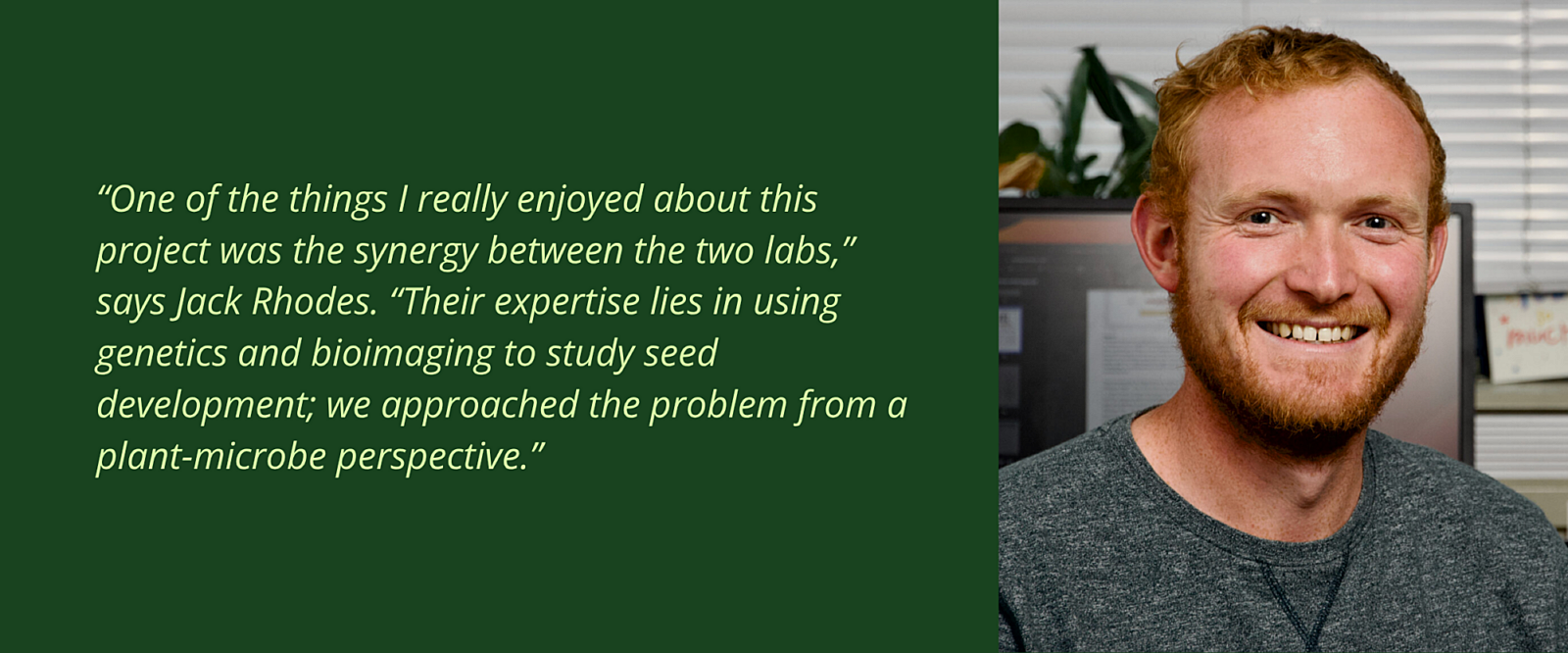
The two labs had very different expertise, but this was never an issue: “One of the things I really enjoyed about this project was the synergy between the two labs,” Jack explains. “Their expertise lies in using genetics and bioimaging to study seed development, which is a lengthy and meticulous process. Meanwhile, we approached the problem from a plant-microbe perspective, using transient expression to quickly test receptor-ligand responses.”
Thanks to his transient expression analyses, Jack could confirm that the IKU2 receptor recognized the PIPL7 ligand.
Encouraged by this result, he created mutant lines of the peptide, which revealed that the single peptide mutant perfectly mimicked the receptor mutant phenotype, suggesting PIPL7 is the IKU2 ligand that Gwyneth’s lab had been looking for, and it mediates signalling between the embryo and the developing endosperm to ensure proper seed development.
Promising applications
This new study was a step forward in our understanding of embryo-endosperm communication during seed development, and the collaboration with RDP allowed our scientists to answer their initial, recurring question: does one cell type express a peptide while another expresses the receptor? When looking at the IKU2-PIPL7 receptor-ligand pair, embryo cells express the PIPL7 ligand, while IKU2 is expressed in endosperm cells.
In addition, our scientists found unexpected applications of their work that could go well beyond Arabidopsis. In exciting proof-of-concept work in a crop, they have now show that increasing expression of PIPL7 results in larger seeds, a trait with significant agricultural potential, leading the team to file a patent for this discovery together with PBL Technology.




 Topics
 Species