Ithaca, New York, USA
November 17, 2025
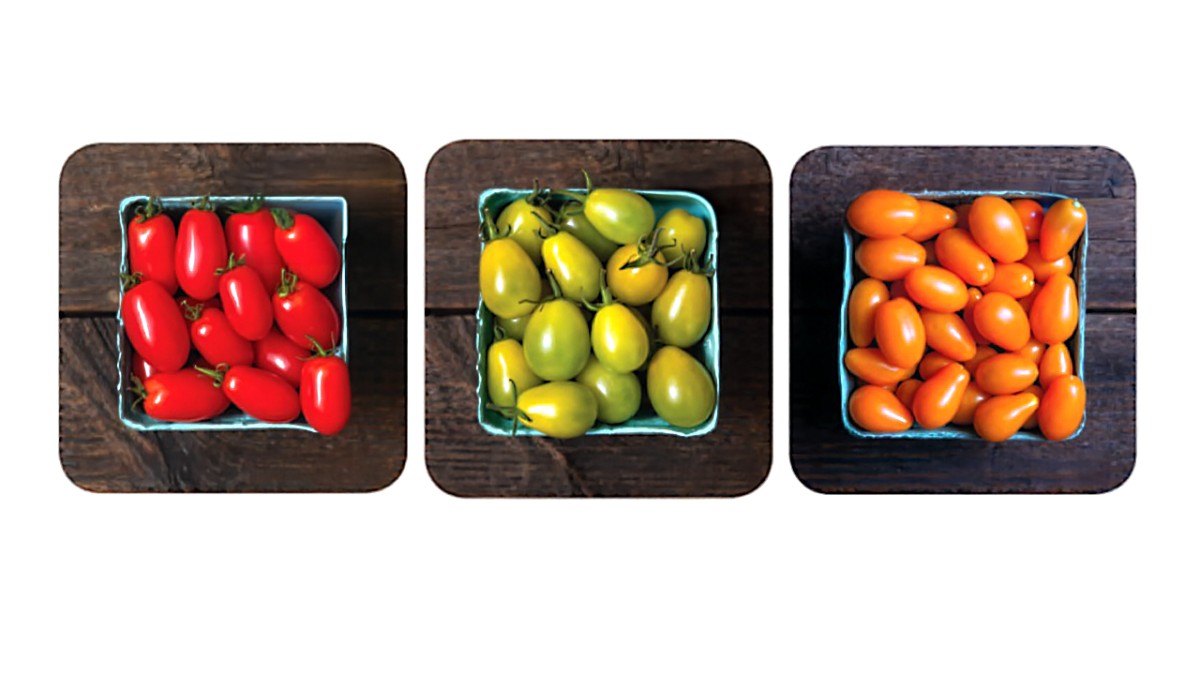
Salads can get even more colorful with three varieties newly added to the “Galaxy Suite” of grape tomatoes, a snack-sized medley bred by a Cornell horticulturist.
“Green Nebula,” “Stargazer” and “Cosmic Pink” are currently available for preorder through High Mowing Organic Seeds, to be delivered in spring 2026 in time for planting.
“Gardeners always want something new, and the first thing they look for is tomatoes,” said Phillip Griffiths, associate professor in the School of Integrative Plant Science Horticulture Section at Cornell AgriTech in the College of Agriculture and Life Sciences, who has now bred a total of nine varieties for the Galaxy Suite.
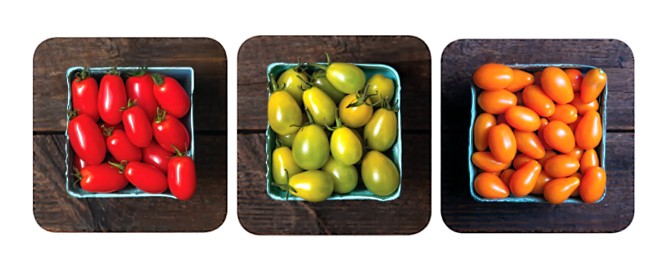
New Galaxy Suite grape tomato varieties, from left, "Cosmic Pink," "Green Nebula" and "Stargazer." - Credit:Provided
Green Nebula, which turns translucent yellow-green when ripe, is a juicy, pear-shaped grape tomato. Stargazer, a pale bright orange, shaped between a pear and a grape, has a fruity flavor. And Cosmic Pink is a meaty, disease-resistant elongated pink grape tomato with a top-ranked flavor profile.
“One of the big benefits of this group is not only do they each look different, obviously having multiple different colors, but each one has a unique ancestry of multiple different heirloom types,” Griffiths said.
Galaxy Suite tomatoes are resonating with home gardeners, farm-to-market and organic growers, as well as in retail sectors, Griffiths said. Currently, Galaxy grape tomatoes are beginning to draw interest from chain stories such as Wegmans supermarkets, Sprouts Farmers Markets and Ark Foods, a plant-based food company.
Griffiths began breeding the new tomatoes in 2005. While his main research focus is on breeding brassica family vegetables (such as broccoli, cauliflower and cabbage), he became interested in tomatoes to fill in downtime between the peaks of brassica vegetable breeding. Simultaneously, the introduction of smartphones and the ability to take and share photos of foods in the early 2000s helped engage more people in the food system.
“The Galaxy Suite plays into where the engagement of consumers in the food system is going and developing in the technological age,” Griffiths said.
“The intention isn’t just to maximize economic sales and yields,” he said, “it’s to make interesting, fun foods more widely available, and to engage people in the growing and consumption of vegetables, and tomatoes in particular.”




 Topics
 Species