October 30, 2025
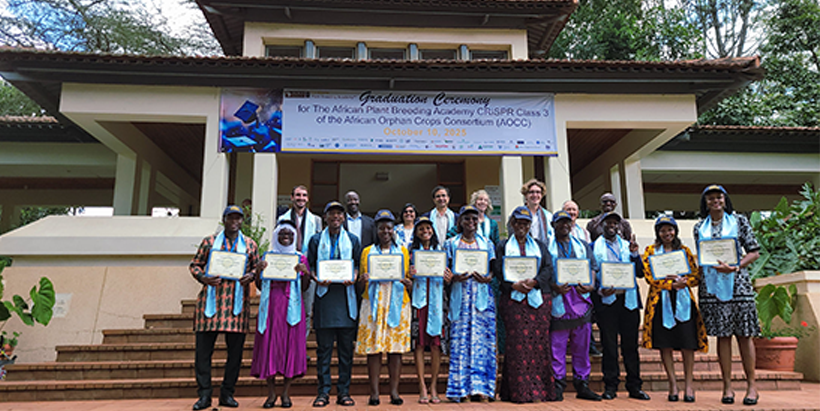 CRISPR Course fellows and facilitators during the graduation ceremony
The third cohort of the Africa Plant Breeding Academy (AfPBA) CRISPR Course has officially graduated, marking another milestone in strengthening Africa’s capacity for advanced crop improvement technologies. This cohort hosted eleven scientists from five African countries, including Benin, Burkina Faso, Ghana, Kenya, and Nigeria.
The training, hosted at the IITA–CGIAR Biotechnology Platform in Nairobi, on the ILRI campus and at CIFOR-ICRAF, is part of a multi-partner initiative of the African Orphan Crops Consortium (AOCC), in collaboration with IITA, the University of California, Davis, and the Innovative Genomics Institute at UC Berkeley. The course provides African researchers with both theoretical and practical knowledge in the use of CRISPR-Cas systems for precise and efficient genome editing in plants.
Over the intensive 6-week training period, fellows learned to design and execute genome editing, from guide RNA design to plant transformation, molecular analysis, and phenotyping, gaining hands-on experience that bridges the gap between science and application. The course also included sessions on biosafety, regulatory considerations, and communication, reinforcing a holistic understanding of responsible research and innovation.
“This program is building a network of African scientists who can lead the application of genome editing to solve agricultural challenges on the continent,” said Dr Leena Tripathi, Director of Genetic Innovations Science Area and leader of the Biotechnology Program. “We are proud of this new cohort of fellows, and confident that they will make meaningful contributions to their home institutions and national programs.”
Speaking on behalf of the graduating fellows, one participant reflected, “This training has transformed how we view biotechnology. We now have the confidence and the technical skills to apply CRISPR in our work and contribute to Africa’s food security.”
 Fellows during a training session in the IITA Biotechnology laboratory
Following the course, each fellow will receive one year of post-course mentorship from experts to support the establishment of genome editing programs for crop improvement at their respective home institutions. IITA remains committed to providing ongoing technical advice and guidance to these fellows as they apply their new skills and develop practical research outputs.
With this third cohort, the CRISPR Course has now trained 32 scientists from 10 African countries, equipping them to advance crop research focused on disease resistance, drought tolerance, improved nutrition, and yield. The program aims to establish a critical mass of African genome editing experts capable of driving innovation in plant science.
The graduation ceremony was marked by enthusiasm and reflection as fellows received their certificates, symbols of both achievement and commitment to advancing modern biotechnology for Africa’s agriculture.
“Our goal,” added Dr Tripathi, “is to ensure that African scientists are not just consumers of technology but active innovators shaping solutions for the continent.”




 Topics
 Species