Western Australia
March 5, 2019
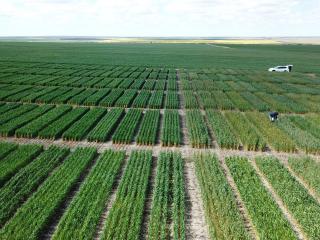
DPIRD researcher Brenda Shackley pictured working on an early season wheat NVT at Hyden to support information on flowering dates of wheat varieties sown in April.
Research to determine the best sowing time for a range of wheat varieties to maximise grain yield and quality across Western Australia’s Wheatbelt will help grain growers make the most of this year’s crop.
Results from 2018 and 2017 trials to match the maturity date of varieties with sowing dates were outlined at the 2019 Grains Research and Development Corporation Grains Research Update, Perth on 25 and 26 February.
Undertaken by the Department of Primary Industries and Regional Development, with co-investment from GRDC, the research involved a series of time-of-sowing trials located at its Merredin, Katanning and Esperance Research Facilities and on-farm at Mullewa.
Department research officer Brenda Shackley said sowing wheat at the optimum time was one of the most important ways of maximising grain yield and quality, particularly in frost and disease prone locations.
“The 2018 trials examined 24 wheat varieties, ranging from long-maturing spring and winter types, such as Forrest and Longsword, to shorter maturing commercial varieties, like Scepter and Devil, and unreleased lines,” Ms Shackley said.
“The trial sowing times were similar at all sites; early-April, late-April, early-May, late-May and mid-June, except Merredin, where the latest planting was in early July.
“Irrigation was applied at Mullewa, Merredin and Katanning to ensure germination for the earlier sowing times where there was no rainfall.
“Plots from each time of sowing were harvested using a small plot harvester as soon as practical at each site, with grain yield recorded and samples taken and cleaned for grain quality testing.”
Ms Shackley said the trial results, during a year in which rainfall across much of the Wheatbelt was average, indicated there was a cost and yield penalty from sowing shorter to mid-season varieties too early.
“The trials showed yield disadvantages from sowing short-mid season varieties in early to late April in the central and southern production zones,” she said.
“Grain quality issues such as stained or frost distorted grains could also occur in the southern production zones.
“In areas of the northern, eastern and southern Wheatbelt without frost risk, it is recommended to sow mid-long season varieties in mid-April, and short-mid season wheats in late May.
“In frost prone sites, delaying the sowing of mid-long maturing types until May resulted in increased yields.”
Ms Shackley said the research continued to highlight the need for varieties that are better suited for early April sowing opportunities in Western Australia.
“Maximum yields are almost always achieved by mid-long varieties sown in early May or short-mid varieties sown in mid to late-May,” Ms Shackley said.
More details on the research can be located on the GIWA website at giwa.org.au/2019researchupdates




 Topics
 Species