United Kingdom
1 April 2026
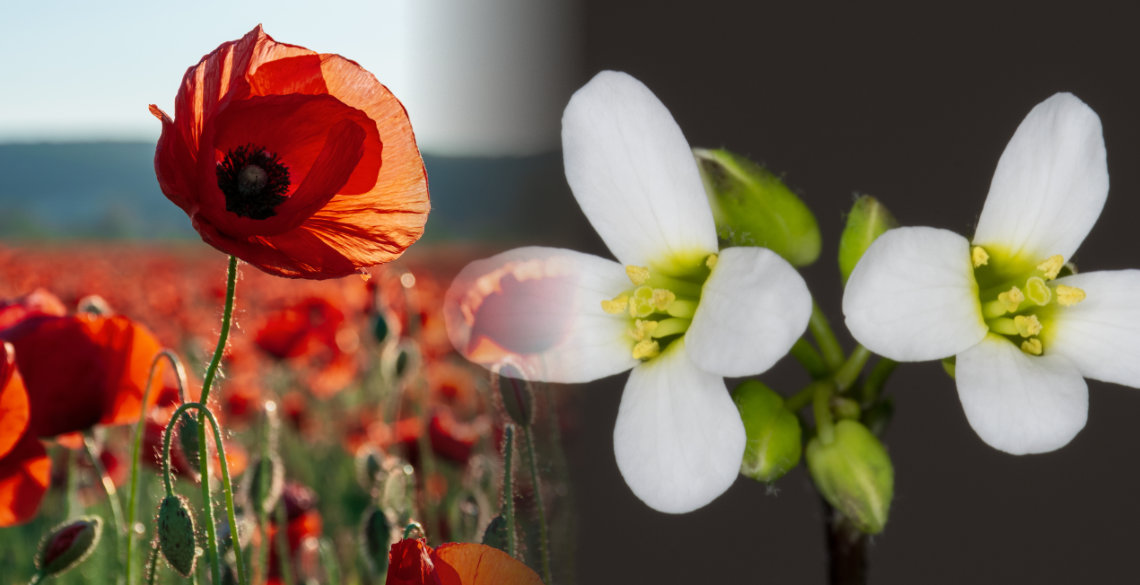 Papaver rhoeas & Arabidopsis flowers: most of the work described in this paper used “engineered” Arabidopsis plants that mimic the self-incompatibility response in Papaver rhoeas.
Researchers at IBERS, Aberystwyth University, together with national and international collaborators, have uncovered how plants rapidly halt pollen tube growth as part of their self‑incompatibility response — a natural mechanism that prevents inbreeding and promotes genetic diversity. Understanding this process opens new possibilities for improving hybrid seed production, crop yields and food security.
Published in The Plant Cell, the study reveals that when pollen is recognised as genetically incompatible, its energy production is rapidly shut down. The research shows that this response involves:
- early disruption of mitochondrial function,
- the generation of specific reactive oxygen species (ROS) signals. These are signalling molecules that help cells rapidly switch processes such as energy production on or off.
- a collapse in key metabolic pathways that normally power pollen tube growth.
By pinpointing how incompatible pollen cells very quickly lose the energy required to sustain fertilisation, the work provides new insights into how plant reproduction is regulated at the cellular level.
While self-incompatibility is essential in nature, it can present challenges for crop breeding, where controlling fertilisation is critical for producing high‑performing hybrid varieties. In the longer term, a deeper understanding of these early cellular decision points could help plant breeders develop improved strategies to manage pollination and hybrid seed production.
This research highlights IBERS’ strength in world‑leading fundamental plant science with clear routes to agricultural impact — supporting crop yield improvement, resilience and long‑term food security.
Read the full article in The Plant Cell here: https://academic.oup.com/plcell/article/38/3/koag031/8490586




 Topics
 Species