De Lier, The Netherlands
January 13, 2026
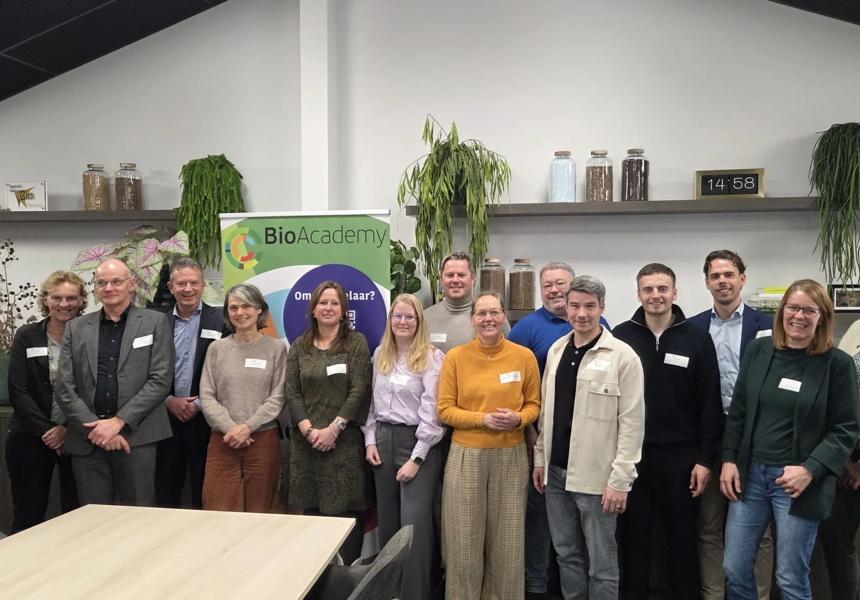
Organic fruits and vegetables are rapidly gaining ground in Dutch supermarkets. But how can that growth be accelerated? The answer lies in knowledge, inspiration and a carefully considered approach to shelf space, according to BioAcademy and Rijk Zwaan. They have taken the initiative to co-develop the very first e-learning programme for fresh produce category managers and employees. Dutch retailers got a sneak preview during the Bio AGF Kennisdag event held at Green Specialties on 11 December 2025.
Growth ambitions in organics
Statistics show that organic fresh produce was the fastest growing category in Dutch supermarkets in the first half of 2025. Ruud van Manen, Fruit Category Manager at Jumbo Supermarkets, has first-hand experience of this. “We used to have to push organic fruits and vegetables more actively, but demand is now rising naturally,” he said. “Our customers are increasingly choosing organic products, mainly for health reasons. In recent years, we have further expanded our range and organised additional promotional activities. Such initiatives are also contributing to the growth. Our goal is that organic products will account for 10% of our total fruit and vegetable sales by 2027.”
Several members of purchasing organisation Superunie have also set targets for their organic fresh produce category, according to Junior Buyer Tine Scholtze who was representing the company at the event.
82% choose organics for health reasons
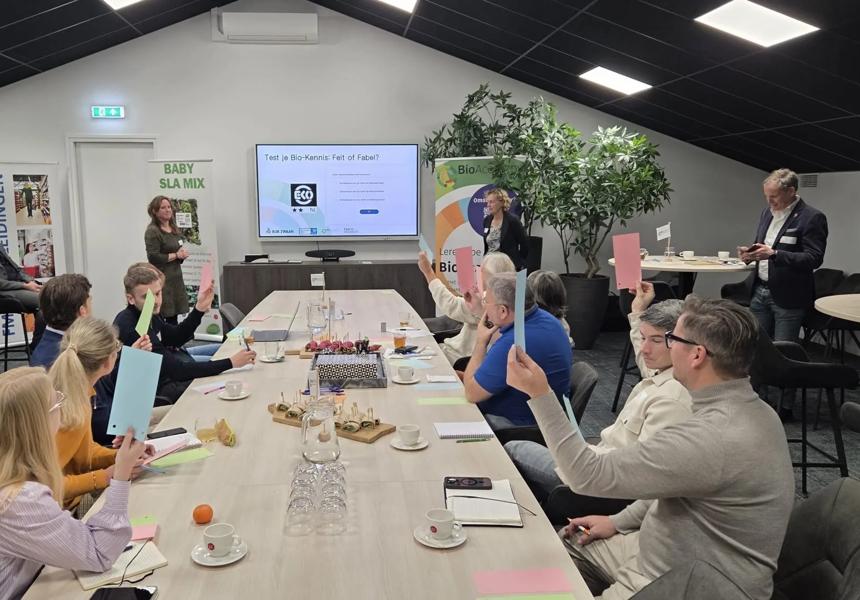
The Bio AGF Kennisdag event offered inspiration for further accelerating growth in this segment. One example was the new e-learning programme for fresh produce managers and employees. BioAcademy’s Geertje Schlaman gave attendees a sneak peek at the content with a mini quiz: “True or false: consumers mainly choose organics for health reasons?” she asked. The correct answer was ‘true’. “The environment used to be a factor in the purchasing decision for organics, but 82% of consumers now say they buy them for health reasons,” she stated.
Tempting the ‘light green’ fresh-produce shopper
In addition to providing facts about organic products, the e-learning programme also contains marketing knowledge. This is based on the retail expertise of Edwin Vels and Gert Bloemendal from the professional training company FMCG Opleidingen. At the event, they explained how to tempt the ‘light green’ fruit and vegetable shopper. “That starts with the right organic range, clear information about the price, targeted promotion and effective presentation,” they said.
Nudging helps
Another effective way to stimulate sales of organic fresh produce is nudging. This was illustrated in the presentation by Jochem Wolthuis, a multifaceted fruit and vegetable expert: “In stores, a gentle push in the right direction really seems to help.”
In real-world trials at Dutch supermarket chains Jumbo and Albert Heijn, on-shelf messaging such as ‘Choose organic, choose taste’ and ‘95% of people buy organic’ led to a 20% increase in sales. “Positive attention works,” said Jochem.
In addition to nudging, he believes that staff in the fruit and vegetable department play a crucial role. “Fresh produce is the most beautiful but also most difficult section, so treat your employees well and invest in their training,” he added.
Praise for the initiative
According to Jumbo’s Ruud, the e-learning programme can form part of the training activities. “It’s not suitable for all our stores, but it is for the pacesetters,” he commented. Tine also praised the BioAcademy initiative: “As Superunie, we have no say in how our store formulas organise their own sales, but we can certainly draw their attention to it.”
Geertje was pleased with that initial feedback. “Hopefully, this initiative will help us accelerate the sale of organic fresh produce together,” she reacted.
Organic cultivation requires investment
The event concluded with a delicious tasting session and guided tour by Noralie van den Einden of Green Specialties. The family business specialises in the cultivation, processing and sale of spinach, rocket and babyleaf vegetables, of which 10% are grown organically. Attendees were particularly impressed to see the LaserWeeder, a chemical-free solution for controlling weeds using precision lasers and AI. “Growing organically is challenging, but this machine helps us to keep going,” stated Adrie van den Einden. The fact that large investments of this kind make organic cultivation more expensive is an interesting extra piece of information for inclusion in the e-learning programme.
Keen to know more about the e-learning programme? Send an email to info@bioacademy.nl or check out BioAcademy’s full knowledge and learning offering. (Dutch)
Discover the assortment
Want to know more about Rijk Zwaan’s varieties for organic cultivation?
Click here to request our new leaflets and explore our range of organic and non-chemically treated seeds.
Our seeds are sold through over 30 local subsidiaries. For the local seeds assortment in your country and availability of organic varieties, please visit your local Rijk Zwaan website.
Groei van biologische groente en fruit: kansen op de winkelvloer
Biologische groenten en fruit winnen snel terrein in Nederlandse supermarkten. Maar hoe zorgen we ervoor dat we die groei versnellen? Met kennis, inspiratie én een doordachte aanpak van het schap. Precies daar speelt het allereerste e-learningprogramma voor AGF-managers en -medewerkers op in. De BioAcademy en Rijk Zwaan namen gezamenlijk het initiatief. Tijdens de Bio AGF Kennisdag op 11 december 2025 bij Green Specialties in Lierop kregen retailers alvast een sneak preview.
Ambities om te groeien in bio
Goed nieuws: biologische groenten en fruit in de supermarkten waren in de eerste helft van 2025 de snelst groeiende categorie. Ruud van Manen, Category Manager Fruit bij Jumbo Supermarkten, ziet die groei terug in de praktijk. “Voorheen moesten we biologische groenten en fruit meer pushen, maar inmiddels trekt de vraag vanzelf aan. We zien dat onze klanten steeds bewuster kiezen voor bio, vooral vanwege gezondheidsredenen. De afgelopen jaren hebben we ons assortiment verder uitgebreid en aan extra promotie gedaan. Ook die initiatieven dragen bij aan de groei. Onze ambitie is om met bio in 2027 op 10% van de totale AGF-omzet uit te komen.”
Ook onder de leden van Superunie zijn er aantal die doelen hebben gesteld op het gebied van de verkoop van biologische AGF, zo laat Tine Scholtze weten, die als Junior inkoper van deze inkooporganisatie deelneemt aan de Kennisdag.
82% kiest voor bio vanwege gezondheid
Om groei van dit segment te versnellen, biedt de middag inspiratie. Onder meer met het nieuwe e-learningprogramma voor AGF-managers en -medewerkers. Geertje Schlaman van de BioAcademy geeft een voorproefje van de inhoud met enkele quizvragen: “Feit of fabel? Consumenten kiezen vooral bio vanwege gezondheid.” De deelnemers die voor ‘feit’ kiezen, blijken gelijk te hebben. “Vroeger waren onder andere het milieu de reden om bio te kopen, nu geeft 82% van de consumenten aan dat vanwege gezondheid te doen”, laat ze weten.oduce category, according to Junior Buyer Tine Scholtze who was representing the company at the event.
Verleid de ‘lichtgroene’ AGF-shopper
Naast feiten over bio bevat het e-learningprogramma marketingkennis. Hiervoor is de retailexpertise van Edwin Vels en Gert Bloemendal van FMCG Opleidingen ingezet. Zij gaan in op hoe we de ‘lichtgroene’ AGF-shopper kunnen verleiden. “Dat begint met het juiste bio-assortiment, een goede uitleg over de prijs, gerichte promotie en een slimme presentatie”, zo lichten zij toe.
Subtiele duwtjes helpen
Ook ‘nudging’ is een effectief middel om bio te stimuleren, laat Jochem Wolthuis, veelzijdig expert in groente en fruit, in zijn presentatie zien. “Op de winkelvloer blijken subtiele duwtjes in de goede richting echt te helpen.”
Uit praktijkcases blijkt namelijk dat bordjes op het schap met ‘Kies voor biologisch, kies voor smaak’ en ‘95% van de mensen koopt biologisch' leidden tot 20% meer omzet bij Jumbo en Albert Heijn. “Positieve aandacht werkt”, concludeert Jochem.
Naast nudging spelen volgens hem AGF-medewerkers een cruciale rol. “AGF is de mooiste én moeilijkste afdeling. Plaats je medewerkers daarom op een voetstuk en investeer in hun opleiding.”
Waardering voor het initiatief
Volgens Ruud van Jumbo kan het e-learningprogramma daaraan bijdragen. “Het past niet bij al onze winkels, maar wel bij de voorlopers.” Ook Tine spreekt het initiatief van de BioAcademy aan. “Als Superunie hebben wij geen rol hoe onze formules de verkoop organiseren, maar we kunnen het zeker onder de aandacht brengen.”
Geertje waardeert de eerste positieve reacties. “Hopelijk versnellen we zo samen de verkoop van biologische groenten en fruit”, reageert zij.
Bioteelt vraagt om investeringen
Een heerlijke proeverij en persoonlijke rondleiding door Noralie van den Einden van Green Specialties sluit de kennismiddag af. Het familiebedrijf is gespecialiseerd in de teelt, verwerking en afzet van spinazie, rucola en baby leafs, waarvan 10% biologisch. Indrukwekkend is de LaserWeeder, een machine die met precisielasers en AI het onkruid bestrijdt zonder chemische middelen. “Dankzij die machine kunnen we doorgaan met de uitdagende biologische teelt,” legt Adrie van den Einden uit. Dat dit soort grote investeringen de bioteelt duurder maakt, is een mooi extra feitje voor in het e-learningprogramma.
Meer weten over het e-learningprogramma? Mail dan naar info@bioacademy.nl. Of check het complete kennis- en leeraanbod van de BioAcademy.




 Topics
 Species