Germany
April 2, 2026
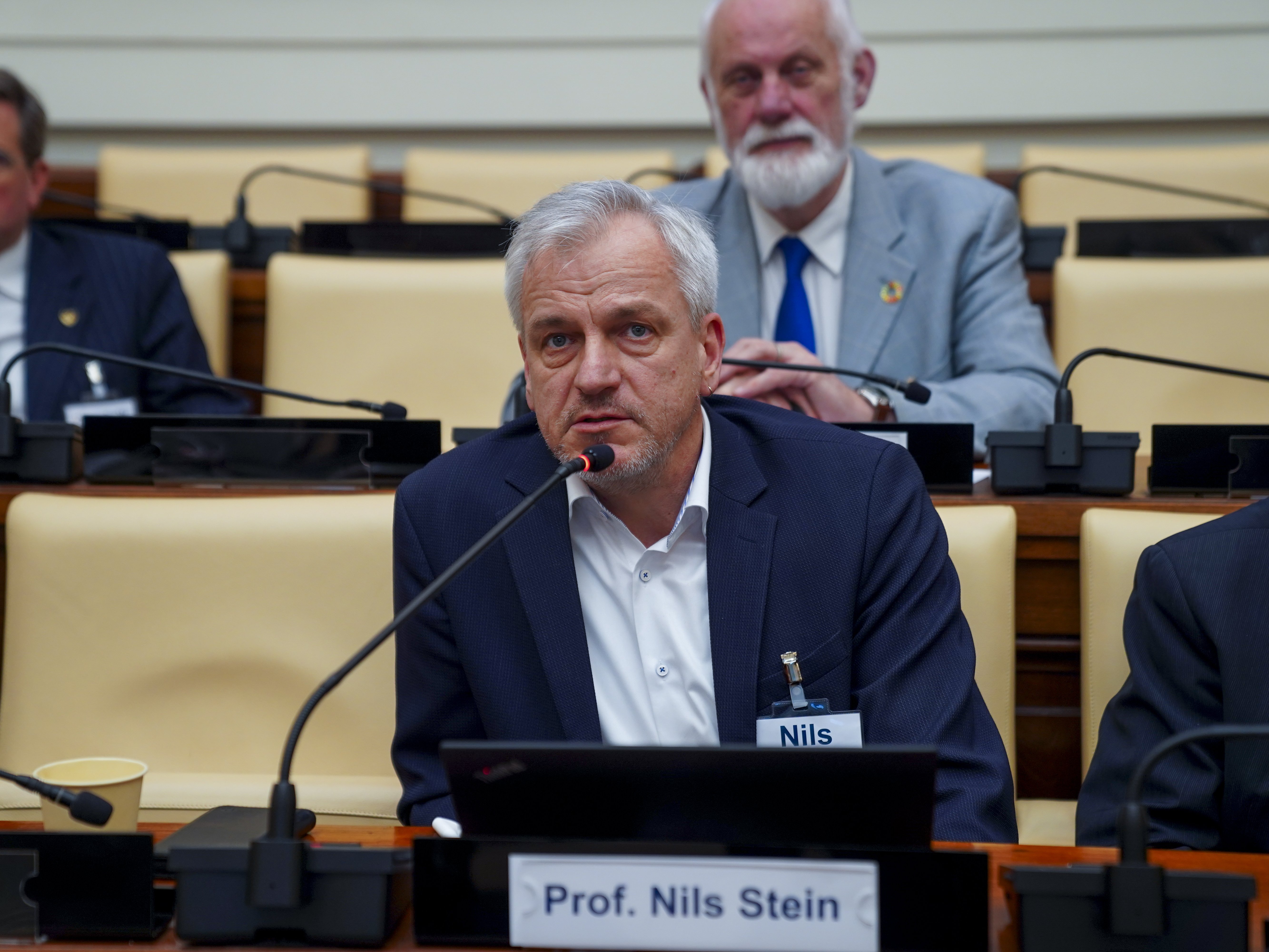 Nils Stein at the Vatican workshop - Photo: Gabriella C. Marino
In the digital age, how can we preserve the diversity of our crop plants and make better use of it? This was the key question discussed at a workshop organised by the Pontifical Academy of Sciences and the Crop Trust in mid-March. Nils Stein, Head of the ‘Genebank department’ at the IPK, attended the event in Rome.
What was the theme of the workshop?
The conservation of genetic resources and food security are issues addressed by both the Pontifical Academy and the Crop Trust. The focus of the workshop held in Rome in March was how modern technologies can be used to conserve and utilise crop diversity. Artificial intelligence, high-throughput sequencing, phenotyping and modern breeding methods are also key topics for the IPK.
One thing is clear: technological innovations are needed to ensure productive, resilient and sustainable food systems in the face of climate change and numerous other global challenges.
The pressure to act is immense. According to the Food and Agriculture Organization of the United Nations (FAO), 673 million people were affected by hunger last year. That equates to almost ten per cent of the global population. The effects of the current war in Iran are already being felt. Disrupted supply chains, several Central Asian countries being cut off from maritime trade, a shortage of fertilisers, and the resulting rise in food prices are exacerbating the situation further. So, how can plant research contribute to the solution?
Our goal is to make genetic resources as accessible and efficient as possible. To achieve this, we need innovative solutions, and we want the IPK to pioneer new technologies. Specifically, we are transforming our Genebank into a Biodigital Resource Centre.
The Catholic Church is not usually associated with innovation. So how have such issues come to be discussed in the Vatican? Who initiated this?
That is an interesting point. This workshop is based on Pope Francis’ 2015 encyclical ‘Laudato si’. In it, the former pope took a critical look at environmental destruction, the depletion of natural resources, and unsustainable lifestyles. Cardinal Peter Turkson, who is also chancellor of the Pontifical Academy of Sciences, explicitly referenced this in his introduction to the workshop.
Who attended the workshop?
In addition to representatives from the Pontifical Academy of Sciences and the Crop Trust, the host, those in attendance included representatives from the Food and Agriculture Organisation (FAO) and the International Plant Treaty. Representatives from the CGIAR Centres and internationally recognised figures from the field of genetic resources research were also present. Chris-Carolin Schön from the Technical University of Munich, myself, and Joachim von Braun were the three representatives from Germany.
How did they get in touch with you?
I was invited directly by the Pontifical Academy and the Crop Trust. IPK has maintained a longstanding and collaborative partnership with the Crop Trust. Its director, Stefan Schmitz, has made several official visits to IPK over the years.
You have undoubtedly been invited in your position as Director of the Genebank, which preserves significant genetic diversity through its collection of over 150,000 samples.
Yes, but this potential must also be harnessed. The treasure trove of the Genebank must therefore be fully exploited. From April onwards, the ‘Twin’ project, funded by the BMFTR, will aim to compile a comprehensive catalogue of the allelic diversity of domesticated barley at the IPK. This data will be made available to breeders and researchers and will form the basis of future research at the IPK. However, we fundamentally need such data and information for all crop plants.
What stands in the way?
Technologically speaking, nothing. But there is just a lack of awareness in some circles. As the cornerstone of food security in Germany, we also need to be successful in increasing awareness of the significance of plant research. Consider personalised medicine, for example, and the associated research costs, in which Germany is already investing considerable sums. Since it affects our food supply and, consequently, the foundation of our existence, it is wise to invest in the full exploitation of the genetic resources of cultivated plants. I am therefore glad that I was able to present our research and ideas in Rome, and that the Pontifical Academy of Sciences, alongside the Crop Trust, is also taking an interest in this.
While biodiversity and modern technologies offer great potential, there are also injustices, such as unequal access to these technologies and data, including digital sequence information. How has this issue been addressed?
These discussions, of course, always touch on issues related to the North-South divide. The issue of sharing the benefits of using digital sequence information (DSI) has been under international discussion for years. For the first time, a system for implementing monetary access and benefit sharing (ABS) from the commercial use of DSI, including plant genetic resources, has been established with the Kunming Agreement and the Cali Fund.
At conferences and workshops, you usually meet colleagues, as well as the occasional breeder or politician. What was it like for you to be invited to the Pontifical Academy of Sciences?
It was undoubtedly a very intriguing and unusual experience. We met at the headquarters of the Pontifical Academy, a villa on the Vatican grounds. Before the meeting, I had a chance to stroll around the grounds a little. It was a peaceful, idyllic spot right in the heart of bustling Rome. Inside the villa, there was a wealth of art, including paintings and busts of former popes. I gave an interview for the Crop Trust, standing next to a bust of Pope Benedict. So, it was nothing like an ordinary scientific conference.
What happens next?
In the coming weeks, the Pontifical Academy of Sciences and the Crop Trust intend to publish a position paper on the workshop’s findings.
Info:
You can find short interviews with some participants here.
You can find the initial statement here.
Digitale Entwicklungen in der Pflanzenforschung: Nils Stein präsentiert beim Workshop im Vatikan
Wie können wir die Vielfalt unserer Kulturpflanzen im digitalen Zeitalter nicht nur erhalten, sondern besser nutzen? Dies war die Leitfrage, die Mitte März bei einem Workshop der Päpstlichen Akademie der Wissenschaften diskutiert wurde. Nils Stein, Leiter der Abteilung „Genbank“ am IPK, war in Rom dabei.
Was war das Thema des Workshops?
Die Erhaltung der genetischen Ressourcen und die Sicherung der Ernährung sind Fragen, mit denen sich auch die Päpstliche Akademie und der Crop Trust beschäftigen. Wie moderne Technologien für den Erhalt und die Nutzung der Kulturpflanzenvielfalt genutzt werden können, war der Schwerpunkt eines Workshops im März in Rom. Künstliche Intelligenz, Hochdurchsatz-Sequenzierung, Phänotypisierung und moderne Züchtungsmethoden, das sind auch zentrale Themen für das IPK.
Klar ist: Wir benötigen technologische Innovationen, um trotz klimatischer Veränderungen und zahlreicher anderer globaler Herausforderungen produktive, widerstandsfähige und nachhaltige Ernährungssysteme zu sichern.
Der Handlungsdruck ist enorm. Laut Ernährungs- und Landwirtschaftsorganisation (FAO) der Vereinten Nationen waren im vergangenen Jahr 673 Millionen Menschen von Hunger betroffen. Das sind knapp zehn Prozent der Weltbevölkerung. Und die Auswirkungen des aktuellen Krieges im Iran sind schon jetzt spürbar. Unterbrochene Lieferketten, mehrere vom Seehandel abgeschnittene Länder Zentralasiens, fehlende Düngemittel und damit einhergehend steigende Lebensmittelpreise, verschärfen diese Situation weiter. Welchen Beitrag zur Lösung kann die Pflanzenforschung leisten?
Unser Ziel ist es, die genetischen Ressourcen so gut und so effizient wie möglich nutzbar zu machen. Dazu benötigen wir innovative Lösungen und wollen am IPK ein Vorreiter in Sachen Technologie sein. Ganz konkret geht es darum, unsere Genbank am IPK in ein Biodigitales Ressourcenzentrum umzuwandeln.
Die katholische Kirche wird nicht unbedingt mit Innovationen in Verbindung gebracht. Wie kommt es, dass im Vatikan nun solche Fragen diskutiert werden? Wer hat dafür den Anstoß gegeben?
Das ist ein spannender Punkt. Die Grundlage auch für den jetzigen Workshop ist die Enzyklika „Laudato si“ von Papst Franziskus aus dem Jahr 2015. In dieser Enzyklika hat sich der frühere Papst schon damals sehr kritisch mit Aspekten wie der Umweltzerstörung, der Erschöpfung natürlicher Ressourcen und einer oft nicht nachhaltigen Lebensweise auseinandergesetzt. Kardinal Peter Turkson, der auch Kanzler der Päpstlichen Akademie der Wissenschaften ist, hat in seiner Einführung zum Workshop ausdrücklich Bezug darauf genommen.
Wer war beim Workshop dabei?
Neben der Päpstlichen Akademie der Wissenschaften mit ihrem Präsidenten Joachim von Braun und dem Crop Trust als Gastgeber waren Vertreter der Welternährungsorganisation FAO und des International Plant Treaty dabei. Hinzu kamen Repräsentanten der CG-Zentren, der „Consultative Group on International Agricultural Research“ (CGIAR) sowie international sichtbare Vertreterinnen und Vertreter aus der Forschung zum Thema genetische Ressourcen. Mit Chris-Carolin Schön von der TU München, mir sowie Joachim von Braun waren wir zu dritt aus Deutschland.
Wie kam der Kontakt zu Dir zustande?
Ich bin direkt von der Päpstlichen Akademie und vom Crop Trust eingeladen worden. Zum Crop Trust haben wir seit Jahren eine sehr enge Verbindung, und dessen Direktor, Stefan Schmitz, war bereits mehrfach bei uns am IPK.
Du bist sicher als Leiter der Genbank eingeladen worden, die mit ihren mehr als 150.000 Mustern viel genetische Vielfalt erhält.
Ja, aber dieses Potenzial muss auch genutzt werden, der Schatz der Genbank muss daher vollständig erschlossen werden. In dem durch das BMFTR ab April geförderten Projekt „Twin“ geht es darum, am IPK einen umfassenden Katalog der allelischen Vielfalt der domestizierten Gerste zu erstellen. Die Daten stellen wir der Züchtung und der Forschung zur Verfügung, und sie werden eine elementare Datengrundlage für zukünftige Forschung am IPK darstellen. Solche Daten und Informationen brauchen wir grundsätzlich aber von allen Kulturpflanzen.
Was steht dem entgegen?
Technologisch jedenfalls nichts, es fehlt stellenweise das richtige Bewusstsein. Es muss uns gelingen, die Bedeutung der Pflanzenforschung als Grundlage der Nahrungsmittelsicherheit auch in Deutschland in die Mitte der Gesellschaft zu bringen. Nehmen wir nur das Beispiel der personalisierten Medizin und die Kosten der damit verbundenen Forschung, für die wir in Deutschland bereits, erhebliche Summen investieren. Vergleichbare Investitionen in die vollständige Erschließung der genetischen Ressourcen von Kulturpflanzen sind gut angelegtes Geld; es geht schließlich um unsere Ernährung und damit um unsere Lebensgrundlage. Insofern bin ich froh, dass ich unsere Forschung und Ideen in Rom vorstellen konnte und dass sich neben dem Crop Trust auch die Päpstliche Akademie der Wissenschaft dafür interessiert.
Neben dem großen Potenzial, das die Biodiversität und moderne Technologien bieten, gibt es aber auch Ungerechtigkeiten - etwa beim Zugang zu diesen Technologien oder zu Daten wie den Digitalen Sequenzinformationen. Wie wurde darüber diskutiert?
Natürlich schwingen Fragen des Nord-Süd-Konflikts bei solchen Diskussionen immer mit. Über einen Vorteilsausgleich bei der Nutzung Digitaler Sequenzinformationen (DSI) wird international bereits seit Jahren diskutiert. Und mit dem Kunming-Abkommen und dem sogenannten Cali-Fund wurde auch erstmals ein Instrument geschaffen, um monetäres Access and Benefit Sharing (ABS) aus der kommerziellen Nutzung sogenannter DSI, auch aus pflanzengenetischen Ressourcen, zu realisieren.
Bei Konferenzen und Workshops triffst Du meist Kolleginnen und Kollegen, gelegentlich auch Züchter und Politiker. Wie war es für Dich persönlich, jetzt in die Päpstliche Akademie der Wissenschaft eingeladen worden zu sein?
Das war ohne Frage sehr interessant und eine nicht alltägliche Erfahrung. Wir haben uns am Hauptsitz der päpstlichen Akademie getroffen, einer Villa auf dem Gelände des Vatikans. Morgens vor dem Treffen konnte ich ein wenig auf dem Gelände herumschlendern; ein ruhiger, idyllischer Ort, mitten in der pulsierenden Metropole Rom.
Wie geht es weiter?
Die Päpstliche Akademie der Wissenschaft und der Crop Trust haben bereits eine erste Stellungnahme nach dem Workshop veröffentlicht.
Info:
Kurze Interviews mit einigen der Teilnehmerinnen und Teilnehmer finden Sie hier.
Die Stellungnahme finden Sie hier.


 Topics
 Species