Westfield, Indiana, USA
January 8, 2025
Every growing season is unique, but 2025 had its share of surprises, says LG Seeds Agronomist Steve Crafton. While the challenges of 2025 may not carry into the 2026 season, there are some tried and true lessons to implement.
He highlights what made 2025 unique, and how corn farmers can plan for success in 2026.
Southern rust hit the Corn Belt
“Southern rust is not a new phenomenon, requiring consistent management in the Southern states,” Crafton says. However, weather in 2025 supported a widespread outbreak of the fungus in the Midwest.
“This was an amount of Southern rust that I had not experienced in my career,” Crafton comments, noting it contributed to significant yield loss in some areas. Thankfully, this fungus does not overwinter in northern Illinois. Crafton says this helps reduce the likelihood of a repeat in 2026 for his geography.
High temperatures took a toll on plant resilience
Another notable occurrence in 2025 was the prevalence of high temperatures from May through September. “In Peoria, Illinois, there were 25 days between July 1 and Aug. 15 where nighttime temperatures remained above 69 degrees,” notes Crafton, explaining that corn plants struggle to rest at those higher temperatures. “The corn plant needs lower temperatures at night to rest and respire — that can tamper with grain fill.”
Corn rootworm still an issue
Corn rootworm is a consistent challenge, and while 2025 did not feature any major differences, corn growers need to remain vigilant against this pest. “I completed some root digs and did see worms feeding,” says Crafton, explaining that products with three traits to combat the pest have been shown to hold up well against corn rootworm pressure.
Product selection needs to remain a top priority
Even though some challenges are beyond growers’ control, there are some traits and management tips they can focus on heading into the new year. “Challenges come in waves. You never know what nature will throw at you,” Crafton says.
When we face a novel challenge, it can be tempting to overcorrect and prioritize products that solve for that one issue. “We’re not going to see the same challenges every year — that's why choosing products that have shown strong yield performance year after year and aligning them to your soils and management practices should be a priority,” states Crafton.
His advice is to spread maturity, diversify seed and prioritize harvest. “There will be some fields as you scout that you know will need to be harvested first and others that will stand strong well into harvest,” Crafton says.
Growers need a mix of corn seed products to keep maturity spread and preserve plant yield potential.
In-season management key to higher yields
What is the key to achieving those high yields? According to Crafton, in-season management is critical. In 2025, you couldn’t discount a good fungicide program. Ways to save are always top of mind, and forgoing fungicide may have looked to be an appealing avenue. However, Crafton warns against this.
Fungicide may help reduce the expansion of disease in the upper canopy, which is critical for setting the plant up for later success. “Even one pass can make a difference,” Crafton notes. “A healthier plant is better able to fill kernels and stand strong until harvest.”
Consult a trusted team for 2026 planning
Now is the time to evaluate and plan. Prioritizing high yields and maintaining a strong fungicide program will remain essential for the success of your farm.
For assistance with planning your 2026 corn crop and any crop management concerns, reach out to your local LG Seeds agronomist.
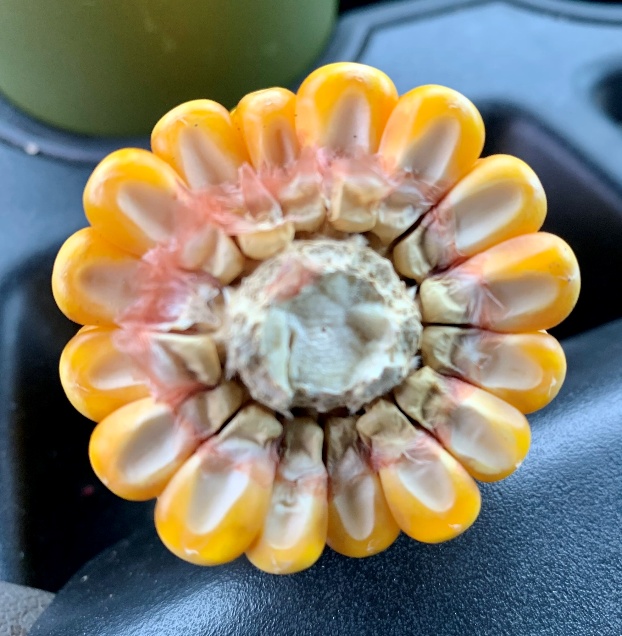
The early onset of disease pressure in the upper canopy after pollination can reduce kernel depth.
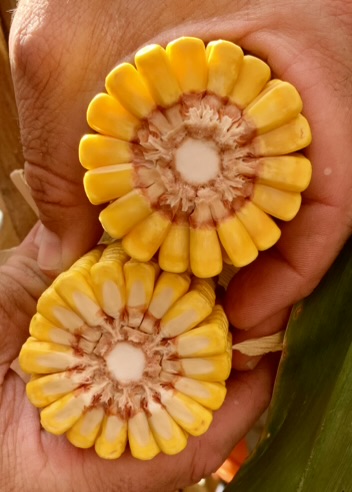
Fungicide is key to achieving a healthy ear with good kernel depth.
ABOUT LG SEEDS
LG Seeds is a dealer-driven national seed brand offering solid agronomic support, straightforward service and consistent plant performance that yields. LG Seeds’ portfolio of broad trait choices and tailored genetics brings corn, soybean, sorghum and alfalfa products to fit farmers’ performance goals. For more information visit LGSeeds.com and follow us on Facebook, Instagram, LinkedIn and X, formerly known as Twitter.
ABOUT GDM
GDM is a global group dedicated to the research, development and commercialization of intellectual property products in plant genetics for row crops. With an innovative approach, the company integrates advanced technologies and exceptional talent to promote innovation, collaboration and the development of new businesses that positively impact the agro-industrial value chain. GDM operates in 15 countries and has a team of 3,400 employees. Find more information at GDMSeeds.com.
ABOUT AGRELIANT GENETICS
AgReliant Genetics, a wholly owned subsidiary of GDM, is committed to providing trusted seed solutions that help farmers grow by delivering one-of-a-kind, high-performing hybrids. Founded in 2000, AgReliant Genetics benefits from direct access to a global germplasm pool and has a top four corn research program in North America. Through their seed brands, AgriGold® and LG Seeds in the U.S. and PRIDE® Seeds in Canada, they proudly offer the latest innovation to farmer customers, whether they grow corn, soybeans, sorghum or alfalfa. Discover more at AgReliantGenetics.com.




 Topics
 Species